

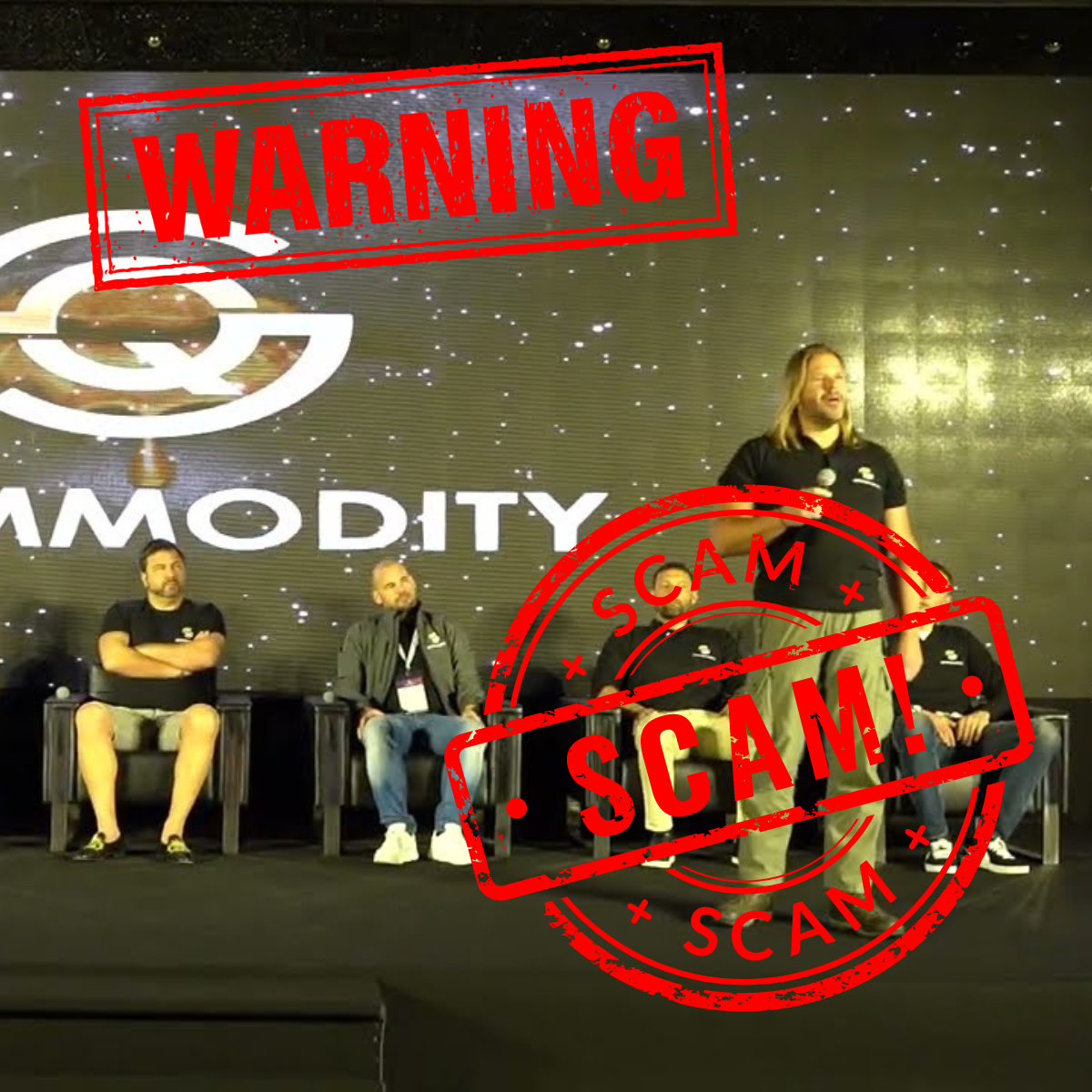
The Rise and Fall of QAAA and Qommodity FRAUD: A Financial Dream Turned Nightmare
QAAA and Qommodity were once heralded as innovative financial tools that promised to revolutionize the way we invest in and secure our financial futures. Built on the premise of stability and backed by tangible assets, these ventures attracted a multitude of investors, including high-profile figures and everyday people alike. However, what started as a promising project quickly unraveled into one of the most notorious financial frauds in recent history.
The Ambitious Beginnings
QAAA and Qommodity were marketed as groundbreaking initiatives that would bridge the gap between traditional finance and the emerging world of blockchain technology. The central idea was to create a new asset class that could tokenize natural resources, providing a stable and secure investment backed by real-world assets. Investors were lured in by the promise of high returns, security, and innovation.
The QGold stablecoin, a product of Qommodity, was designed to be a gold-backed cryptocurrency that would provide stability in the volatile crypto market. The prospect of a secure, gold-backed digital currency attracted many, as it seemed to offer the best of both worlds: the stability of gold and the flexibility of cryptocurrency.
The Cracks Begin to Show
However, as the projects progressed, cracks began to appear in the facade. Despite the grand promises, there was little transparency about how the assets backing these tokens were managed. Investors began to raise concerns about the lack of concrete evidence supporting the supposed value of the underlying assets.
As more money flowed into Qommodity and QAAA, it became increasingly clear that the projects were not delivering on their promises. Reports began to surface of unauthorized transactions, fraudulent activities, and mismanagement of funds. Rutger Schumer, who initially played a key role in promoting QAAA, was later implicated in unauthorized token sales for personal gain, further deepening the scandal (Qommodity QAAA, Qommodity QAAA, Qommodity QAAA).
The Unraveling: From Innovation to Fraud
The situation reached a tipping point when it was revealed that Qommodity had become a breeding ground for financial mismanagement and fraud. High-ranking officials within the company, including Edward Meijers, were accused of orchestrating a complex web of deceit that led to massive financial losses for investors.
According to an article, the financial performance of Qommodity was far from the stellar returns promised. Instead, it was marked by significant underperformance and the manipulation of financial records to present a false image of success. The article highlights how the company's leadership engaged in fraudulent practices to cover up the reality of their financial struggles, leading to the loss of millions of dollars.
Who is to Blame?
The blame for the Qommodity and QAAA fraud falls squarely on the shoulders of those who orchestrated the scheme. Edward Meijers, the mastermind behind the operations, played a central role in deceiving investors. His ability to manipulate those around him, including key figures like Rutger Schumer and Henri Lechner, allowed the fraud to continue for as long as it did.
However, it wasn't just the leaders who were at fault. The lack of due diligence by investors, coupled with the absence of stringent regulatory oversight, allowed the fraud to flourish. The high-profile endorsements and the veneer of legitimacy provided by figures like Schumer and Lechner also played a crucial role in luring investors into the scam.
The Fallout: Massive Losses for Investors
The financial losses resulting from the Qommodity and QAAA scams are staggering. Investors, many of whom were lured by the promise of secure returns, found themselves with worthless tokens and shattered dreams. The total losses are difficult to quantify, but estimates suggest that millions of dollars were siphoned off by the masterminds of the scheme.
The fallout from this fraud has left a trail of financial devastation, with victims ranging from individual investors to large financial institutions. The scandal has also led to a broader reckoning within the financial and cryptocurrency communities, highlighting the need for greater transparency, regulation, and accountability.
Conclusion
The story of QAAA and Qommodity serves as a stark reminder of the dangers inherent in the world of high finance and emerging technologies. What started as a promising venture quickly devolved into a nightmare for those involved, with the blame resting squarely on the shoulders of those who orchestrated the fraud. As the dust settles, the victims of this scheme are left to pick up the pieces and seek justice for the massive financial losses they have suffered.
Qommodity and its associated entities like QAAA and QGold have been accused of operating schemes that resulted in substantial financial losses for investors. The specifics of how much has been earned versus how much has been scammed are not transparently reported. However, the companies have faced widespread criticism and skepticism regarding their claims of asset backing and their operational integrity. Scamadviser highlights concerns about the legitimacy of Qommodity-QAAA's operations, noting that extreme reviews (both highly positive and highly negative) could indicate potential manipulation or fraudulent activities (ScamAdviser).